
How to Check for a Warrant in Marion County
Begin a Marion County warrant check at Indiana MyCase, the public index for eligible court cases. It is not an active-warrant database. Search by cause number when you can. A name search starts with a last name, then narrows by first name, middle name, date of birth, court, case status, and filing dates. A citation or cross-reference number may also work, though formats differ. Look for an issue, recall, quash, or surrender entry. Online results are not the official court record. Save the cause number, division, and event date. The Marion County Clerk request portal or the issuing court can confirm what that entry means now. Custody in Marion County is a separate question. If an arrest may already have happened, the official custody lookup shows whether the person is held. Before acting on an uncertain result, let counsel help weigh surrender, bond, or a motion.
- Search the known case or citation number in MyCase.
- If needed, narrow a name search by date of birth, court, status, and filing dates.
- Open the docket and identify the issuing Marion court division.
- Ask the Clerk or issuing court to confirm current status; use custody lookup only for booking status.
- Discuss any warrant with a lawyer or the verified Safe Surrender contact before appearing.
Marion County Has No Single Warrant List
The Marion County Sheriff posts no broad public active-warrant search. That gap changes the route, not the access. The Marion County Clerk keeps the court-warrant records, MyCase displays eligible public case information, and each issuing division can explain its own orders. The sheriff handles service, custody, and restricted law-enforcement systems. A blank search proves nothing. No result does not mean no Marion County warrant exists. Older records, sealed or expunged cases, juvenile matters, confidential documents, and temporarily excluded probable-cause material may not appear. An old docket entry also fails to prove the order still stands. The reliable answer matches the case number and issuing court. Then a fresh clerk or court confirmation settles it.
Quick answer: MyCase is the public starting point, but the Marion County Clerk or issuing court is the official confirmation source.
Types of Warrants in Marion County
Marion County records use several warrant terms. Each one points to a different legal path. An arrest warrant follows a judicial finding and authorizes an arrest. A bench warrant often follows a missed court appearance or a disobeyed order. Traffic failure-to-appear warrants come from court traffic cases. Search warrants, civil writs of attachment, and civil tax warrants are separate instruments, and the word alone does not tell you the consequence.
| Warrant Type | How It Arises | Who Issues It |
|---|---|---|
| Arrest warrant | Probable cause and statutory grounds support an arrest order | Marion Circuit or Superior Court, or another authorized court |
| Bench warrant | A missed hearing or unmet court duty prompts an order from the bench | The judge handling that case |
| Traffic FTA warrant | A person fails to appear or answer in a traffic proceeding | Marion traffic or another issuing court |
| Search warrant | Police seek judicial authority to search | A judge or magistrate |
Capias is not the local term. Marion County records use plain words instead. The ordinary terms are arrest warrant, bench warrant, warrant for failure to appear, summons, and civil writ of attachment.
Marion County MyCase Search Controls
The official MyCase search tips explain three routes. The Case tab also accepts a citation or cross-reference number where one exists. The Name tab requires a last name. Attorney details drive the Attorney tab. Court choice, open or closed status, filing dates, sounds-like matching, and a trailing starts-with wildcard can narrow a broad Marion County result set.
| Control | Best Use | Limit |
|---|---|---|
| Case number | Known Marion cause number | Search format may omit hyphens or leading zeroes |
| Name | Own case when no number is known | Last name required; results capped at 1,000 |
| Court and dates | Narrowing a common name | Case status is not warrant status |
| Sounds-like or wildcard | Spelling variants | Only a trailing starts-with wildcard is supported |
A captcha or mining warning guards MyCase against bulk collection. It does not block lawful searches. The Indiana Courts search-help page adds a useful nudge. A precise cause number and court division serve a Marion County warrant check better than a broad name-only query.
What a Marion County Warrant Record Shows
A Marion County warrant is usually pieced together from linked court records. Look for the cause number, court and division, case type, filing date, charge or legal basis, docket event, issue date, service or return, bail terms, later recall or quash entry, and current case status. Some fields stay withheld or offline. Assume no separate public warrant number. The cause number, issuing division, and event date are safer identifiers. Those details point the clerk straight to it.
| Cause number | The Indiana case identifier used to find the docket; a citation number may differ |
|---|---|
| Court and division | The Marion court that entered the order and can explain it |
| Legal basis | The charge, missed appearance, violation, or other basis shown publicly |
| Issue and event dates | The sequence of the warrant, return, surrender, recall, or later action |
| Bond or release terms | Only what the current court order displays; no one amount fits all warrants |
| Case status | Open or closed case status, which is not itself an active-warrant finding |
The MyCase overview from Indiana Courts warns that the online display is not the official record. Errors and omissions can appear. A later recall can change its meaning for a Marion County warrant entry.
Marion County Docket Status Traps
MyCase labels a case open or closed. Those tags do not mean active warrant or cleared warrant. A Marion County case can stay open for reasons having nothing to do with a warrant, while a closed case may still show an old warrant event in its history. Sequence and dates matter more than the label.
- Issue
- The court enters or authorizes the warrant.
- Return or service
- A record of what happened after process went out.
- Recall or quash
- The court withdraws or sets aside a warrant by order.
- FTA
- Failure to appear, a missed required court event that may prompt a warrant.
- Expunged
- A statutory record treatment, not another word for recalled.
Read forward from the first Marion County warrant event. A later surrender, return, recall, new warrant, bond review, or disposition may control the outcome. Ask the issuing division something narrow. Tie the question to the cause number and the entry date.
Who Issues and Serves Marion County Warrants
Several courts can issue process in Marion County. The Marion Circuit Court, the Marion Superior Court divisions, Marion County Municipal Court, and Beech Grove City Court all act within their own authority. A judge decides whether to issue, recall, or change a warrant. The Marion County Clerk keeps the underlying court record. The sheriff receives process, executes it, provides court security, and handles custody. Local police may also execute process under local law, but a police website is never the official court file.
That split of labor is why one phone call rarely settles everything. The sheriff can route a service or custody question. The Clerk answers for the public court record. The issuing division explains its own order. Lawrence is a useful example: local officers there may serve process and execute city arrest or search warrants, yet the court and the Clerk in Marion County remain the path for confirming what the record actually says.
The Marion County Clerk public-record form shows the county's direct request channel.
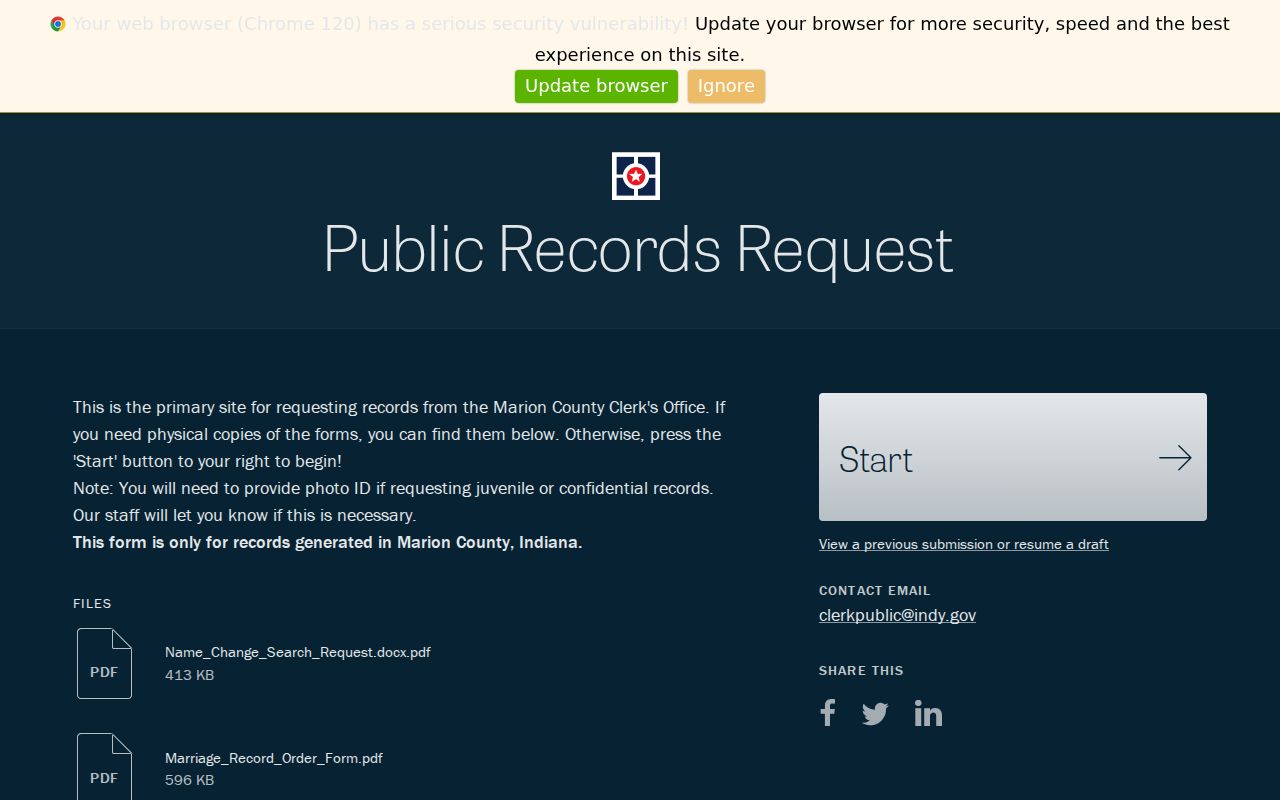
The form reflects the same split in Marion County: send court-record requests to the Clerk, even though the Sheriff may serve the warrant itself.
Marion County Court Operations at Scale
The Marion County Courts site points to the Community Justice Campus as the main court location. It opened in April 2022. The campus holds 71 courtrooms. Listings sort the work by Circuit Court, Superior civil and family matters, criminal divisions, traffic violations, ordinance violations, and Initial Hearing functions. That breakdown helps steer a warrant question to the division that owns the case.
The official court listings capture shows how Marion County divides that work.
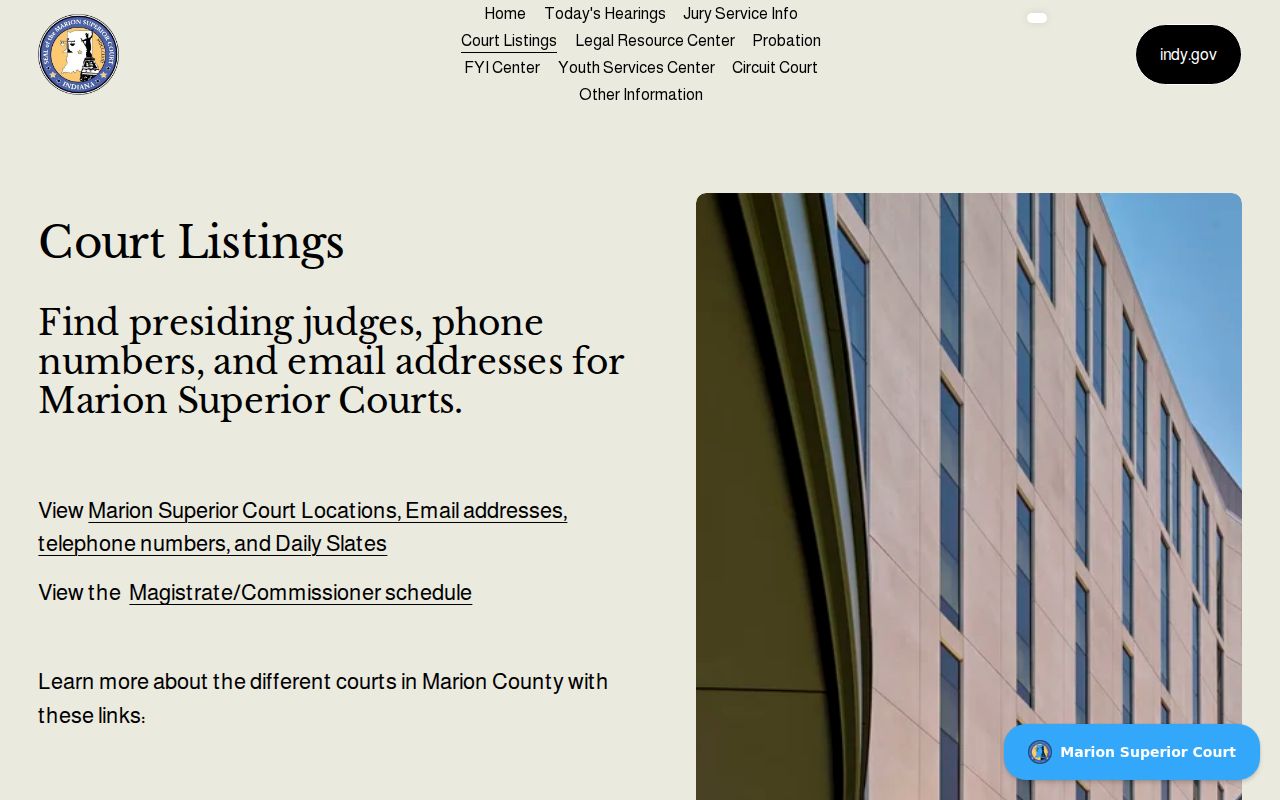
At this scale, the division and cause number are essential. The figures describe court operations, not the current count of warrants. The Indiana Judicial Branch Marion County page names the local court district and links its governing material.
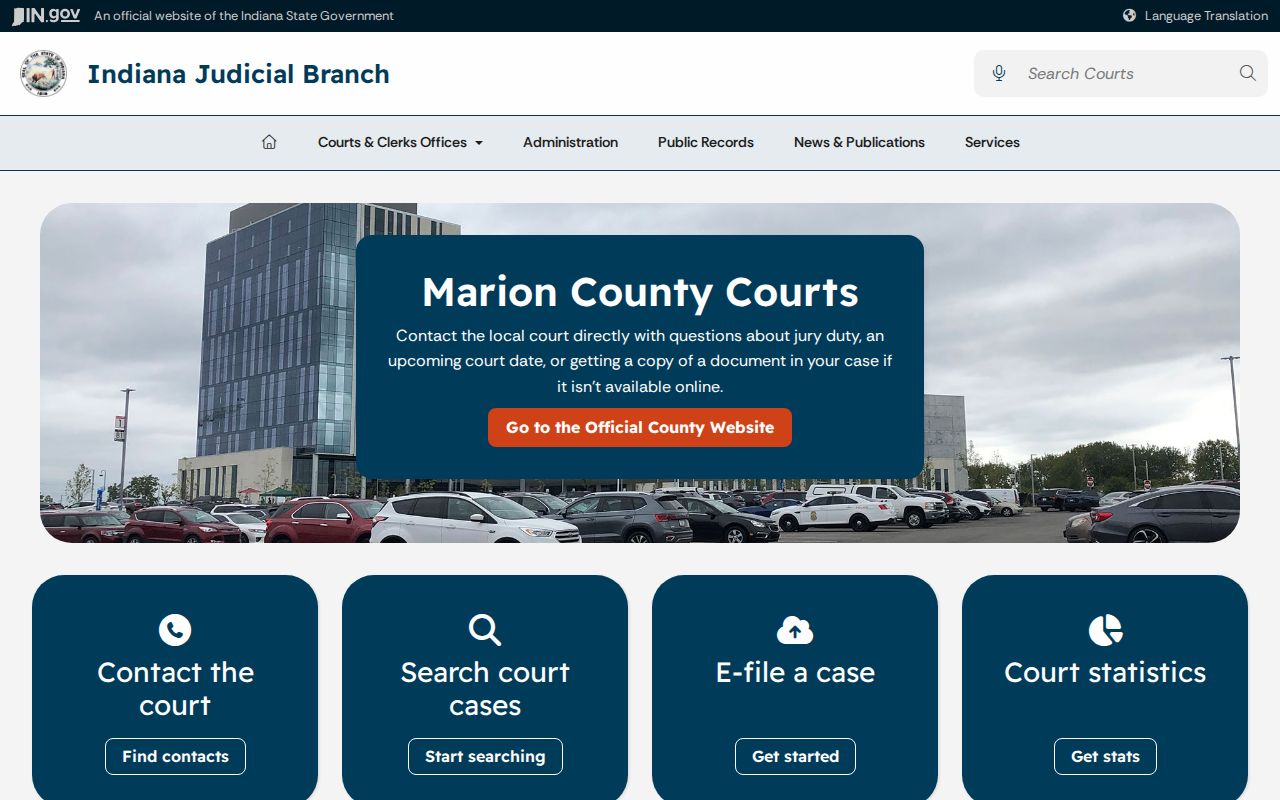
The district view orients you, but the division listing is the better source for a case-specific call about a Marion County warrant.
What to Do If You Have a Marion County Warrant
Marion County has no single warrant-clearing procedure. The right next step turns on the issuing court, the case type, why the order issued, current bond terms, and any other hold. Confirm the cause number and the latest docket first. Then ask the issuing court or a lawyer whether the case calls for a new date, a motion to recall or quash, payment on an eligible court matter, an appearance, bond, or a planned surrender.
Never assume an online payment clears a warrant. Beech Grove City Court and the state payment portal both offer payment paths for eligible cases, but neither promises removal of every bench or arrest warrant. Showing up at a courthouse does not guarantee a same-day recall either. An active warrant or pending case can also shape release and Initial Hearing decisions under the current Marion bail schedule.
Important: Speak with a lawyer or the issuing court before surrender because an active warrant may lead to arrest and a court-set release process.
Marion County Safe Surrender Route
Local reporting has described Safe Surrender in Marion County as a permanent, year-round contact route for eligible non-felony matters. The reported channels were 317-327-SAFE and SAFE@indy.gov. The program could help a person ask about lifting a warrant, resetting a case, or resolving an eligible matter through a planned process. It was never described as blanket amnesty, immunity from arrest, or a replacement for the issuing court.
The county publishes no current official program page. Confirm eligibility, hours, location, and intake details directly before relying on them. Give only what the verified program asks for, and keep the cause number and issuing division handy. Serious felony matters, other holds, and court-set conditions may follow a different path.
Process: Confirm the case in MyCase › verify the issuing court › contact counsel or Safe Surrender › follow the court-approved appearance or motion route.
Safe Surrender is a contact option in Marion County, not a searchable warrant list. It also replaces neither emergency services nor legal advice.
Public Access to Marion County Warrant Records
Indiana public access rests on the Access to Public Records Act and the Rules on Access to Court Records. A warrant entry may be public, but public does not mean every document is online. Court rules shield categories such as juvenile, expunged, sealed, mental-health, probation, pretrial-supervision, and investigative material. A judge may also temporarily exclude some probable-cause warrant records when release could increase flight risk, cause undue harm, or harm an investigation.
Key Rules:
Indiana Code 5-14-3 gives the general APRA inspection framework, subject to exemptions.
Access to Court Records Rule 5 identifies confidential and temporarily excluded court material.
Public Access Counselor opinion 18-FC-20 identifies the Clerk as warrant custodian and explains NCIC and IDACS limits.
Ask for the underlying court or agency record in Marion County, not restricted NCIC or IDACS output. If a document is not online, the MyCase access table shows the difference between online access and clerk or courthouse access.
Marion County Online and Official Records
MyCase is the fastest public starting point for Marion County warrant records, while the Clerk and the court hold the official record. The difference is practical. Online financial figures may not match the clerk's current balance. A document link may be missing even when a public paper record exists. A docket may also omit restricted or older material. Confirm before any surrender, trip to court, or payment.
The Indiana Courts access guide shows which records may require clerk or courthouse access. Technical availability and legal public status are separate questions. If MyCase lacks a file, use the cause number in a Clerk request rather than treating the blank screen as a final answer. The Indiana Courts public-records hub offers another official route to court access rules.
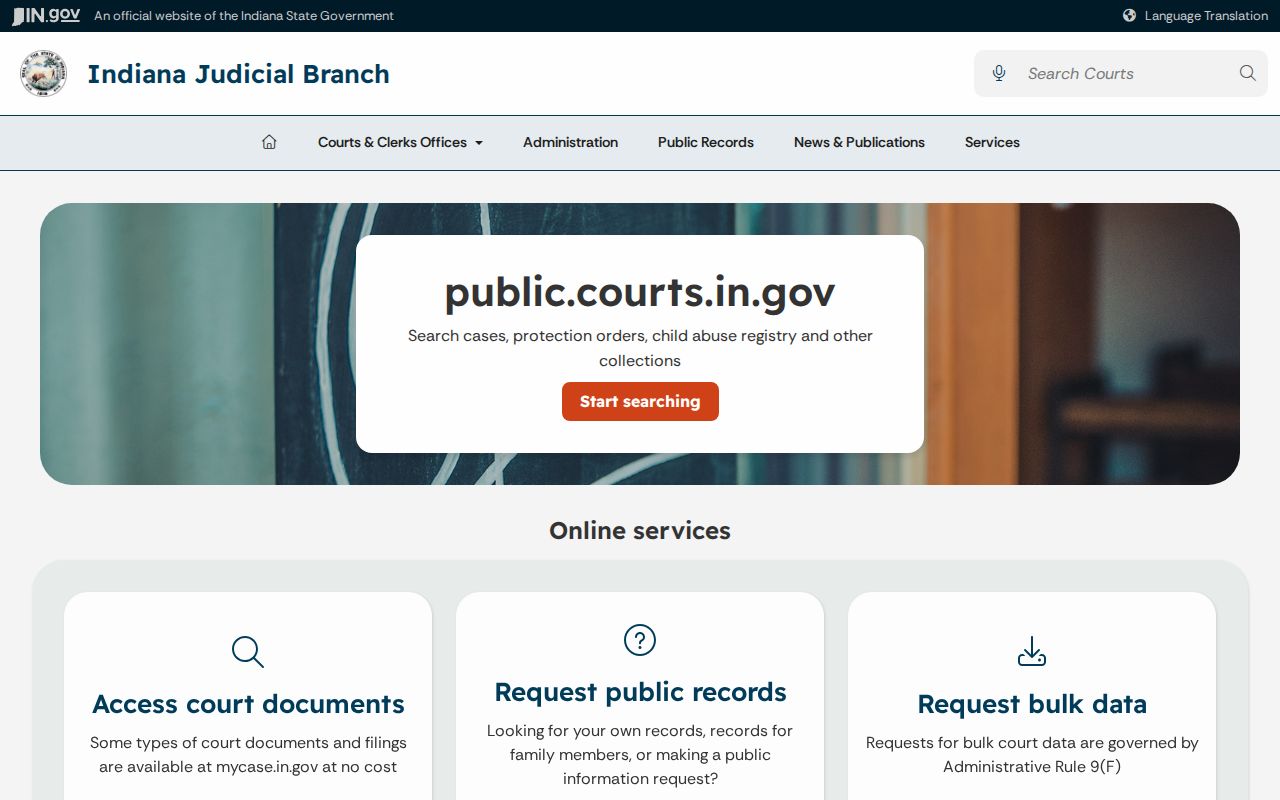
Its court-record focus helps separate judicial files in Marion County from a general city or police records request.
Marion County Traffic and City Paths
A traffic problem in Marion County can move down more than one path. Beech Grove City Court posts its own contact and payment details. Speedway runs an ordinance process, and certain unresolved matters there can move to Beech Grove after 60 days. Indianapolis parking review works through an administrative form, and that form carries a 30-day window. None of these routes tells you whether a warrant is actually active. Missed a traffic date? Search the case or citation in MyCase, then call the court named on it. Indiana Code 9-30-3-8 lets a court issue a warrant after a failure to appear or answer, and a Bureau of Motor Vehicles notice may follow. That BMV notice is not the warrant itself. Keep the channels straight. A parking citation, an ordinance notice, a traffic case, and a criminal warrant each live in their own lane. For Marion County court services generally, the Community Justice Campus page is a sound first stop. Its navigation reaches court listings, calendars, bail material, and daily slates. Handy as those tools are, they still don't add up to a single Marion County warrant roster.
Warrant Records by City in Marion County
Five cities in Marion County anchor the city-level warrant records below, listed in 2020 Census population order. That rank says nothing about warrant volume or enforcement. Indianapolis handles its cases through the consolidated Marion court path. Lawrence, Beech Grove, Speedway, and Southport sit outside Unigov and run their own police systems. One wrinkle: Beech Grove City Court handles matters from several municipalities. So the city on your notice may not be the court holding the record.
Indianapolis Warrant Records
887,642 · IMPD and the Marion Circuit and Superior Court route
Lawrence Warrant Records
49,370 · Lawrence Police plus the court named on the notice
Beech Grove Warrant Records
14,717 · Local police and a city court with broader jurisdiction
Speedway Warrant Records
13,952 · Town police and an ordinance route that may reach Beech Grove
Southport Warrant Records
2,123 · Separate police contacts and issuing-court confirmation