
The Marion County Most Wanted Program
Marion County publishes no countywide most-wanted program today. Neither the Sheriff, the courts, the Clerk, nor IMPD posts a current roster of wanted people, and third-party sites cannot fill that gap. The gap does not mean Marion County has no warrants. The Sheriff still executes court process and runs warrant checks through restricted law-enforcement systems internally, while the Clerk holds the underlying court-warrant records and Indiana MyCase displays eligible public case information. Even where a most-wanted page exists, it works as a selective public alert rather than a full record, so it can never stand in for the issuing court's current order. For an actual warrant search, the court record is the dependable route.
No Official Marion Roster Found
What the county and court sites do offer is practical. Visitors find court listings, daily dockets, case search, records requests, a custody lookup, and agency contacts. A Marion County Sheriff public warrant search is not among them, and no official most-wanted roster appears. Only official channels answer a warrant question.
Describe and link only: Never copy a name, photo, mugshot, or wanted roster. A current official agency page must hold any alert.
A social media post or old news story can outlive the facts. A cached page or copied image may linger long after an arrest, a surrender, or a warrant recall. Without a current agency URL and a publication date, none of it is a sound public-safety source. Even a live official alert is a dated notice, not a complete Marion County warrant database.
How the Lists Work
A most-wanted list is a short roster chosen for publicity, not a catalog of every warrant. Agencies pick names based on their own priorities plus a valid warrant, and Marion County publishes no local selection rules or update schedule. People also come off lists for ordinary reasons: an arrest, a surrender, a recall, or a fresh agency decision. Web updates lag behind those events. Someone missing from a list can still have an outstanding warrant, since most warrants never get selected at all. That is why the issuing court's current record beats any roster when you want your own status.
Note: A wanted list is a dated, selective alert. Presence or absence cannot establish every Marion County warrant’s current status.
Historical Alerts Are Not Current
Old reporting can document a program or a past event, but it proves nothing about a warrant today. News coverage in Marion County has described Safe Surrender events and warrant-system errors alike. The lesson is procedural. Confirm the newest entry with the Clerk or issuing court, and leave an old name or image where it lies.
Issued A Marion County court entered a warrant order.
Outstanding A claim about current status, needing up-to-date confirmation.
Recall The court withdrew the warrant.
Surrender A voluntary appearance that may lead to court action.
Those terms are why copying a Marion County docket is unsafe. One docket can hold several warrant events, and only the newest controlling order plus direct court confirmation settles which one still stands.
How to Report a Tip Safely
Marion County has no verified Crime Stoppers most-wanted program or anonymous reward process, so do not count on either. If someone is in immediate danger, call 911. For a non-emergency concern, use the current official police or Sheriff channel for that place. A records request is never an emergency report.
- Decide whether the situation is an immediate danger. If so, contact emergency services.
- Use the official agency website to verify its current non-emergency number or tip method.
- Share relevant conduct and location facts without publishing them or confronting anyone.
- Let trained officers decide what action is lawful and safe.
Key point: Report urgent facts through an official channel, then step back. Never approach, follow, restrain, or publicly identify a person.
Marion Sheriff System Boundaries
The Indiana Public Access Counselor's Marion opinion names the Clerk as custodian of court warrants. It also notes the Sheriff checks NCIC and IDACS. Those restricted systems' results cannot simply be released as a public roster.
| Source | Public use | Limit |
|---|---|---|
| MyCase | Eligible case and docket search | Not the official record |
| Marion Clerk | Known public court record requests | Access rules and redaction apply |
| Sheriff systems | Official service and internal checks | NCIC and IDACS are not public search boxes |
| Custody lookup | Current or released custody search | Not proof of warrant status |
Request the underlying public court record when possible, not restricted database output.
Most Wanted vs an Active Warrant
"Most wanted" is a selective alert concept. An active warrant, by contrast, is a court-status claim about an unserved or unresolved order. Marion County publishes no official roster for either, and MyCase offers no verified active-warrants-only filter.
| Feature | Most-wanted alert | Active warrant |
|---|---|---|
| Scope | Selected agency alert | Individual court order |
| Public visibility | Only if officially published | May appear as a public docket event |
| Status check | Current publishing agency | Issuing court or Clerk |
| Change event | Agency removes or updates alert | Court recalls, quashes, or resolves order |
Neither label can be read off a mugshot in Marion County. A booking photograph relates to custody, not to whether a court order still has force.
Federal Marion Fugitive Information
For federal fugitive information at the district level, the U.S. Marshals Service Southern District of Indiana page is the official source. The page states that no profiled fugitive information is available for the district. That statement means exactly what it says. It does not tell you that no federal warrants exist in or around Marion County.
The official PACER pricing page sets out the federal record-access fees and limits that apply to a Marion County federal case search.
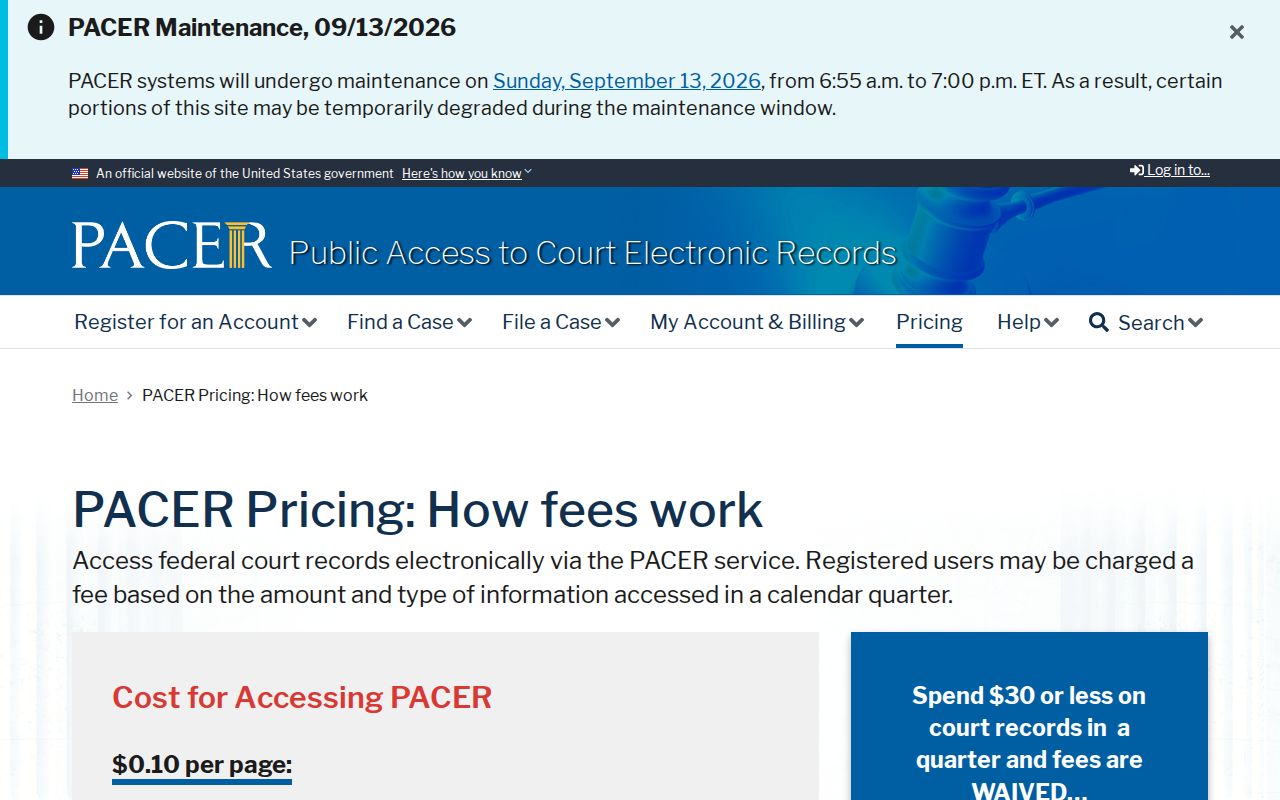
PACER is a federal docket channel for cases touching Marion County, not a public most-wanted roster, and it cannot prove a sealed warrant does not exist. Federal matters run through PACER and the Southern District court, not Indiana MyCase. Sealed indictments and warrants stay out of public search results. Any Marshals profile belongs at the agency's own source.
If You Believe You Are on a List
Marion County publishes no public most-wanted roster a person can lean on. Skip the search-engine images and the private databases. Begin instead with your own case in Indiana MyCase. That free court portal lists open matters by name. Write down the cause number, the division that issued the warrant, and the newest docket event. Then ask the Marion County Clerk, that court, or a lawyer whether the warrant still stands and what comes next. A federal case runs on a different track. Use the Southern District or PACER there. If an arrest has already happened, a custody lookup can locate the booking, though it cannot show the warrant status that came before. Safe Surrender has served as one Marion County contact path for certain non-felony matters; eligibility and procedure change, so verify with officials directly.
Important: Consult counsel before surrender. A lawyer can confirm the court order, other holds, bond questions, and the safest lawful appearance route.
Verify Your Own Marion Warrant
Checking yourself in Marion County works case by case, and no wanted roster is required. Search a known case number first rather than a broad name. Then read past any old warrant label to the newest docket entry, noting the court division and the event date. Ask the Clerk or the issuing court whether the warrant remains active and what response it requires.
- Search the exact case or citation identifier in MyCase when available.
- Check later docket events for recall, quash, arrest, surrender, or a new hearing.
- Contact the issuing division through the official Marion court directory.
- Request a specific public order from the Clerk if it is not available online.
Sealed, expunged, juvenile, confidential, or temporarily excluded Marion County records may never surface. A blank result is not proof that no warrant exists.
Future Marion Alerts Need Proof
Before trusting any Marion County agency alert, give it a simple test. The URL must belong to the agency itself. The publication date must be current, the status must not have been replaced by a newer notice, and the agency must state the public reason for posting it. An image lifted from the page, without those elements, proves nothing. Even a verified alert still deserves describe-and-link treatment in Marion County. Name the office that published it and send readers to that official page for the alert itself. Do not copy its roster, names, images, allegations, or personal details. That way a stale local copy never outlives the agency's update, and responsibility stays with the office that can correct it. For court status, go back to MyCase, the Marion Clerk public-record request, and the issuing court. For urgent safety, use the current official emergency or police channel.